
Building a Path to Publication
Providence Neuroscience Institute | Technical Writer
When I joined the Providence Neuroscience Institute, it was clear to me that our research publication output didn’t reflect the quality or quantity of the work we did. Manuscripts were getting stuck in development, expectations varied from project to project, and our writing didn’t always match what reviewers and journal editors were looking for.
I started by mapping the entire manuscript process to understand were the work was breaking down. This helped make the problems visible: unclear expectations, inconsistent reporting practices, and a workflow that wasn’t predictable.
Working closely with clinicians and researchers, I built the tools we needed to move forward: a style guide to unify our editorial approach and voice, manuscript templates that put journal and reporting requirements directly into the writing environment, and a journal selection report that helped teams target the right publications from the start.
As we adopted these tools, collaboration became easier, drafts became stronger, and the process itself became more predictable. Over time, we saw the impact: more manuscripts moving through the pipeline, higher‑quality submissions, and a doubling of our annual manuscript acceptances at peer-reviewed journals.
This work didn’t just improve our output. It gave the team a shared language for talking about writing, a clearer path from start to finish, and the confidence that our research could compete on an international stage.
Content strategy
Editorial leadership
AMA style guide
Workflow development
Audience awareness
Research reporting standards
Content development
Team building
Genre analysis
Documentation
Opportunities

Genre awareness
How do we craft our scientific manuscripts to meet the expectations and conventions of the genre?

Teamwork
How can our team be more collaborative?

Level-up rigor
How can we produce content that showcases the quality of our research? How can we communicate data to meet the highest international standards?

Audience analysis
What do reviewers and journal editors want to see? How can we deliver reviewers a great reading experience?

Workflow
How can we manage the lifecycle of manuscript production to avoid pain points?
My approach
Understanding the problem
I mapped the full manuscript lifecycle to pinpoint where teams were getting stuck. This gave me a clear view of what our analysis, scientists, and designers needed to move work forward.
Clarifying standards
I created practical tools (style guides, manuscript templates, and journal selection reports) to standardize reporting, reduce rework, and give researchers the information they needed directly in their workflow.
Strengthening collaboration
I partnered closely with clinicians and researchers, offering kind, direct feedback and helping teams understand genre expectations. This built trust and made the writing process more predictable and collaborative.
Raising the bar
By combining structural analysis with hands‑on writing and editing, I helped the team improve rigor, streamline workflows, and produce manuscripts that better met journal standards.
Mapping the process
To make the process visible, I created a timeline diagram that broke down the full lifecycle of manuscript development, from early research design to final publication. At the time, many teammates saw “writing a manuscript” as a single task, rather than a complex, multi-step process. This visual helped set expectations, clarify priorities, and give our analysts, scientists, and writers a shared understanding of the work ahead.
Project-specific timelines
To help research teams plan for tight deadlines, I create project‑specific timeline that map every step required to reach submission. The goal of these timelines is to give everyone a realistic view of the work ahead—what needed to happen, in what order, and how long each phase typically takes. This visual made the process concrete, aligned expectations across the team, and helped us make informed decisions about scope, responsibilities, and pacing.
Creating a shared standard
To reduce confusion and improve consistency, I developed the Providence Neuroscience Institute Research Content Style Guide—a shared reference for how we write about data, methods, and patients. Every entry in the Style Guide reflects a real disagreement we worked through as a team. By grounding our decisions in published standards and best practices, the guide gave us common ground, reduced friction, and helped us communicate with more clarity, confidence, and rigor. It also helped put an end to those arguments about grammar and style that tend to pop up again and again. If you ever feel bored talking about the oxford comma, you know exactly what I mean.
Collaborating to find common ground
I collaborated closely with our analysts, research project managers, and institution leadership to develop the Style Guide. By pulling together multiple view points, including from the American Medical Association Manual of Style, The CDC Clear Communication Index, and EQUATOR Network reporting recommendations, I developed a robust resource for authoring biomedical publications.
Communication, communication, communication
Before publication, we sent out an email to every research team in our network to let them know about the new resource, where to find it, and how to use it. The text of the email also appears as an introduction to the Style Guide on our organization’s SharePoint site.
A living resource
The Style Guide has a permanent home on PNI’s SharePoint site, where research teams throughout our network can utilize it. We plan to update the style guide on a regular basis to make sure it adapts to a rapidly changing industry and continues to serve our needs.

Choosing journals with confidence
To help teams choose the right audience for their research, I created journal selection reports that summarize the most important information about a set of target journals. Each report also highlights cross‑journal trends and major takeaways to give authors a clear sense of what journals are looking for. These documents made the journal selection process faster, more transparent, and grounded in real data.
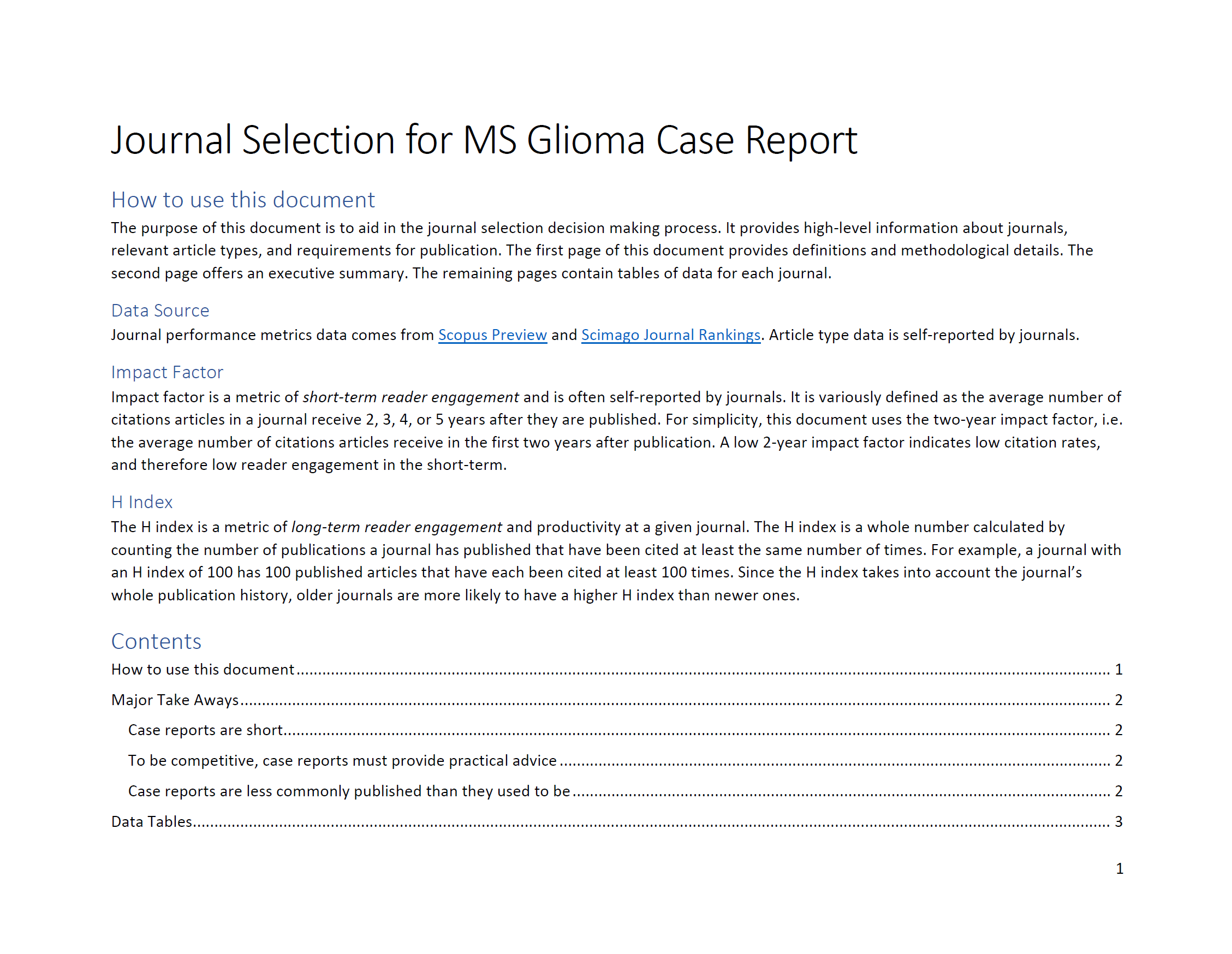
Determining submission priority
To help teams make smarter decisions about where to submit, I created a simple framework for prioritizing journals. Choosing a target journal is a bit like applying to college: it helps to identify a reach, a good fit, and a safety option upfront. Because manuscripts typically strengthen with reviewer feedback, I recommend submitting to the “good fit” journal first, the “reach” journal second, and the “safety” journal last.
This framework gives teams a realistic, strategic path through the submission process and helps set expectations from the start.
Bringing reporting requirements into
the writing process
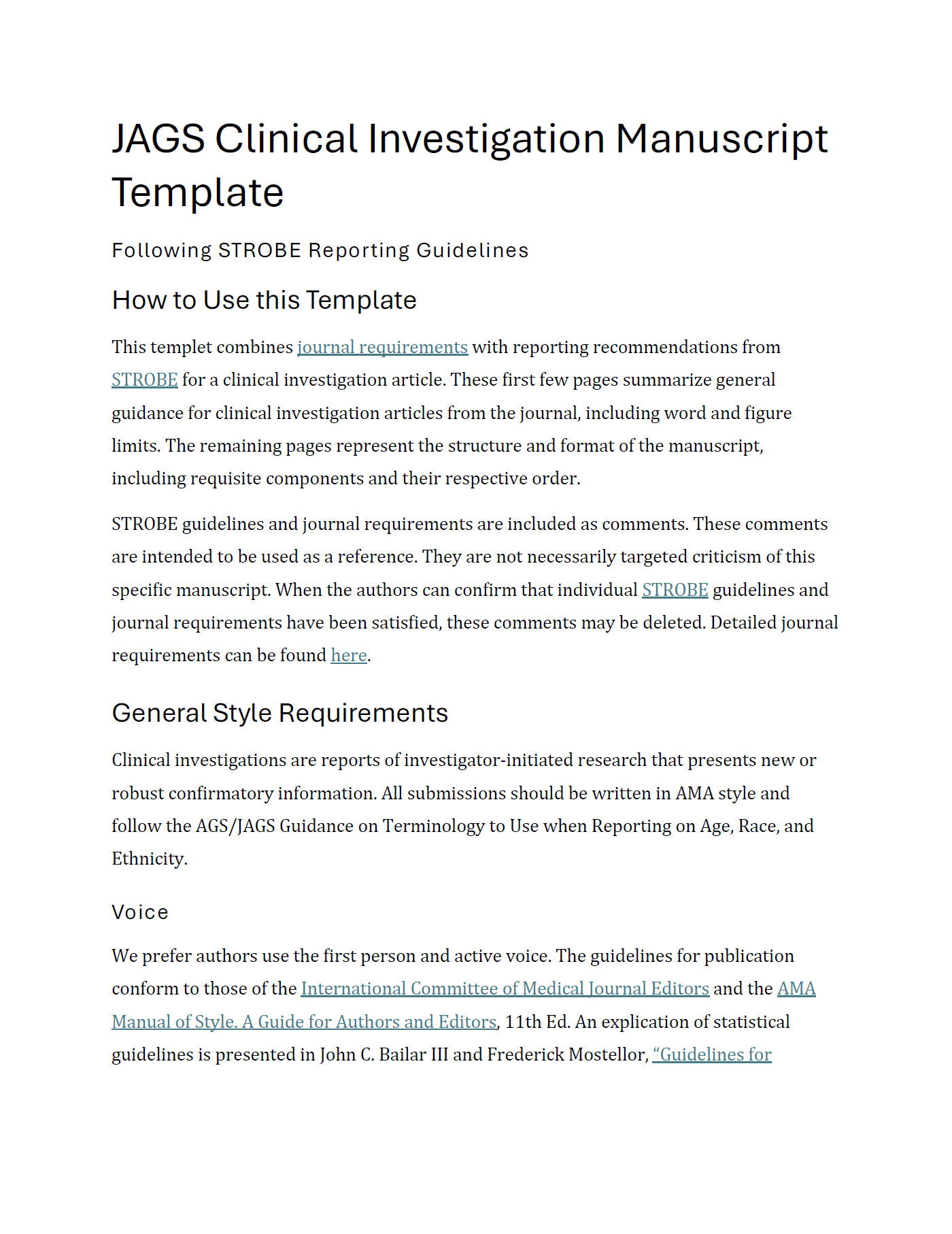
To make high‑quality scientific writing easier for our team, I created a set of manuscript templates that combine international research reporting standards with the target journal’s guidelines. These templates put the right expectations directly in the writing environment, which clarified structure, reduced rework, and helped authors understand the expectations and conventions of scientific writing early in the drafting process.
Everything in its place
The order and format of the information in these templates reflect the requirements of the specific target journal. Ethical guidelines and research reporting requirements are integrated as comments.
The entire document is designed with paragraph styles to produce an intuitive and consistent information hierarchy.
Impact and outcomes
Clearer processes
By mapping the full manuscript lifecycle and visualizing it for the team, I created a shared understanding of what “writing a paper” actually involves. This reduced confusion, aligned expectations, and made working together as a team easier.
Higher-quality, fewer roadblocks
The organizational style guide resolved recurring disagreements about voice, data reporting, and inclusive language. With shared standards in place, teams spent less time debating style and more time strengthening our publications.
Efficient manuscript development
Manuscript templates with built‑in reporting standards and journal requirements set expectations early, reduced rework, and helped authors structure their drafts the right way. This made drafts clearer, more compliant, and easier to revise.
Smarter publication decisions
Journal selection reports and submission‑order guidance gave teams a data‑driven way to choose where to submit. This replaced guesswork with transparent criteria and helped teams plan strategically for multiple submission rounds.
Measurable results
Together, these tools created a more predictable, supportive publication pipeline. Draft quality improved, collaboration strengthened, and the institute ultimately doubled its annual publication submissions and acceptances.
Next case
Crafting a patient-centered newsletter with the National African Americans with Multiple Sclerosis Registry.